Finding Balance: Yoga for Strength, Flexibility, and Inner Calm
In a culture that often glorifies busyness and nonstop productivity, yoga offers a rare and necessary counterbalance. It’s more than stretching on a mat: practiced intentionally, yoga builds real strength, increases functional flexibility, and cultivates a steady, quiet mind. You don’t need to be young, flexible, or “Zen” to start. You only need a willingness to explore your body and breath.
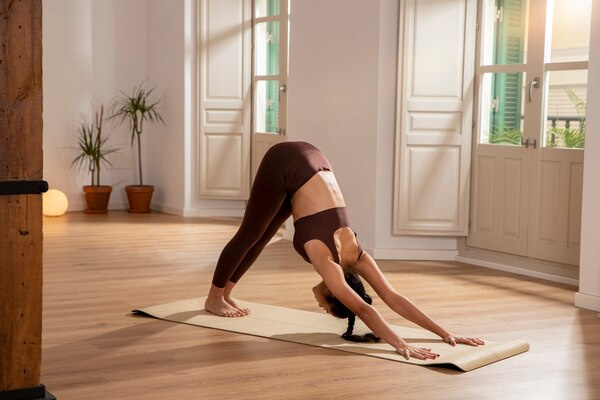
Below is a practical look at how yoga develops strength, flexibility, and inner calm—and how you can design a balanced, realistic practice around your own life.
How Yoga Builds Real-World Strength
Classic images of yoga emphasize flexibility, but the practice is surprisingly effective for building strength—especially in the stabilizing muscles that support healthy posture and movement.
1. Muscular Strength and Endurance
Many yoga poses are essentially bodyweight strength exercises:
- Standing poses (Warrior I & II, Chair Pose) build leg and glute strength.
- Plank variations and Chaturanga strengthen the chest, shoulders, arms, and core.
- Balancing poses (Tree, Warrior III, Half Moon) train the small stabilizers around the hips, knees, ankles, and spine.
Because many poses are held for several breaths, you’re not just building strength, but muscular endurance—the ability to sustain effort over time. This is crucial for daily activities like walking, lifting, carrying, and sitting upright without strain.
2. Core Stability Over “Six-Pack” Strength
Yoga emphasizes core stability rather than just surface-level abdominal strength.
- Poses like Boat Pose, Side Plank, and Forearm Plank train the deep abdominal and back muscles.
- Standing poses and balances require the core to engage in subtle ways to keep you upright.
A stable core helps protect the lower back, supports efficient movement, and improves balance—especially important as we age.
3. Joint Support and Injury Prevention
Unlike some forms of strength training that focus heavily on major muscle groups, yoga works your body in multiple planes of motion and angles.
This:
- Strengthens the muscles that support the joints,
- Helps correct muscular imbalances,
- Can reduce the risk of overuse injuries from repetitive activities (like running, cycling, or sitting at a desk).
Flexibility as Functional Freedom
Flexibility in yoga is not about touching your toes for its own sake. It’s about enhancing functional range of motion so your body can move with more ease and less pain.
1. Releasing Chronic Tightness
Modern life creates tension patterns:
- Tight hip flexors and chest from sitting and screens,
- Stiff hamstrings from inactivity or heavy training,
- Tight neck and shoulders from stress and posture.
Yoga targets these areas through mindful stretching:
- Forward folds lengthen the back body and hamstrings.
- Hip openers (Pigeon, Lizard, Low Lunge) create space in the hips and lower back.
- Chest openers (Cobra, Bridge, Camel variations) counteract slouching.
Over time, this can:
- Reduce discomfort,
- Improve posture,
- Make everyday movement feel lighter and more natural.
2. Strength + Flexibility = Stability
Flexibility without strength can be unstable. Yoga’s unique advantage is that most stretches are active: you engage one group of muscles while lengthening another.
For example:
- In Warrior II, you’re opening the hips and chest while actively engaging the legs and core.
- In Standing Forward Fold with engaged thighs, you strengthen the quads while lengthening the hamstrings.
This combination supports:
- Better joint alignment,
- Safer movement,
- More control over your body at the end range of motion.
3. Flexibility as a Gradual Process
Healthy flexibility develops over time. Forcing yourself deeper into a stretch can:
- Irritate joints,
- Strain ligaments,
- Trigger protective muscle tightening.
Yoga emphasizes:
- Working at a sustainable edge of sensation,
- Moving slowly,
- Using the breath to soften resistance.
This patient approach respects your body’s natural pace of change.
Inner Calm: The Quiet Power of Breath and Awareness
Physical benefits often draw people to yoga, but mental and emotional balance keep many of them practicing.
1. The Nervous System Reset
Yoga’s use of breath (pranayama), slow movement, and present-moment awareness activates the parasympathetic nervous system—the “rest and digest” mode.
This can:
- Lower heart rate and blood pressure,
- Reduce muscle tension,
- Decrease stress hormones like cortisol.
Even a short practice can provide a reset from constant alertness, worry, or overstimulation.
2. Mindfulness in Motion
Yoga turns movement into a moving meditation by encouraging you to:
- Notice sensations in the body,
- Follow the rhythm of the breath,
- Observe thoughts without getting lost in them.
Over time, this skill transfers off the mat:
- You catch stress earlier.
- You pause before reacting.
- You recognize patterns—like clenching your jaw, hunching your shoulders, or holding your breath—before they escalate.
3. Breath as an Anchor
Breathing is the bridge between body and mind. In yoga, you often synchronize movement with breath:
- Inhale to lengthen or lift,
- Exhale to soften or deepen.
Simple practices like:
- Slow, deep belly breathing, or
- Exhaling slightly longer than you inhale
signal safety to the nervous system, helping reduce anxiety and mental restlessness.
Balancing Strength, Flexibility, and Calm in Your Practice
A well-rounded yoga routine doesn’t lean too heavily on just stretching or just strength. It incorporates all three dimensions—body, breath, and mind.
1. Components of a Balanced Practice
A single session can include:
- Centering (2–5 minutes)
- Seated or lying down, simply notice your breath and body.
- Set a gentle intention (e.g., “steady and kind,” “listening to my body”).
- Warm-Up (5–10 minutes)
- Cat-Cow, gentle twists, shoulder rolls, hip circles.
- Dynamic movements rather than deep static stretches.
- Strength + Mobility (10–20 minutes)
- Standing poses (Warriors, Chair, Lunge variations).
- Planks and core work.
- Gentle flowing sequences (like Sun Salutations) if appropriate.
- Deeper Stretching (5–15 minutes)
- Longer holds in hip openers, hamstring stretches, chest openers.
- Use props (blocks, straps, cushions) to find sustainable positions.
- Breathing + Relaxation (5–10+ minutes)
- A simple breathing technique.
- Final relaxation (Savasana) to integrate the practice.
Even condensed into 15–20 minutes, this structure can feel complete.
2. Frequency Over Intensity
You don’t need long, intense sessions. Consistency matters more:
- Aim for 3–5 sessions per week, even if only 10–20 minutes.
- Sprinkle in micro-practices:
- 3 minutes of breathing,
- A few stretches during work breaks,
- One or two poses before bed.
Regular, moderate practice yields more sustainable results than occasional extremes.
Practical Sequences for Different Needs
1. For Strength Emphasis (20–30 minutes)
- Centering + gentle warm-up
- 3–5 rounds of a simple flow (e.g., Half Sun Salutations)
- Standing sequence:
- Warrior I
- Warrior II
- Side Angle
- Chair Pose
- Repeated on both sides
- Plank variations (Plank, Side Plank, Forearm Plank)
- Short stretch for hips and hamstrings
- Savasana
Focus: steady breath, controlled transitions, active engagement.
2. For Flexibility Emphasis (20–30 minutes)
- Gentle warm-up with dynamic movements
- Slow standing poses with attention to alignment
- Longer holds (1–3 minutes) in:
- Low Lunge or Lizard,
- Pigeon or Figure-Four,
- Seated Forward Fold,
- Supine twist.
- Relaxation with full-body release
Focus: mild sensation, not pain; smooth, relaxed breathing.
3. For Inner Calm and Stress Relief (10–25 minutes)
- Comfortable seated or lying position
- Gentle movements: neck rolls, shoulder circles, Cat-Cow
- A few supported poses (e.g., Legs Up the Wall, Supported Child’s Pose)
- 5–10 minutes of slow breathing:
- Inhale for 4, exhale for 6 (or any comfortable ratio)
- Short body scan in Savasana
Focus: softness, safety, feeling supported by the ground.
Listening to Your Body: Safety and Sustainability
A balanced practice respects where you are today.
- Pain is a no. Discomfort is okay; sharp, pinching, or burning sensations are a signal to back off.
- Modify freely. Use blocks, straps, cushions, or the wall. Bend your knees. Drop your back knee in lunges.
- Honor fluctuations. Some days you’ll feel strong; others you’ll feel tired or stiff. Adjust intensity rather than forcing a predetermined idea of what your practice “should” be.
This attitude of listening and responding with kindness is part of the inner calm yoga cultivates.
Letting the Practice Shape How You Live
Over time, a balanced yoga practice influences more than your hamstring length or shoulder strength. You may notice:
- Stronger body: better posture, more stability, fewer aches.
- Freer movement: easier bending, reaching, climbing stairs, getting up from the floor.
- Calmer mind: more space between stimulus and response, better sleep, less reactivity.
- Deeper self-awareness: a clearer sense of your limits, needs, and priorities.
Yoga doesn’t ask you to escape your life. It helps you inhabit it more fully—grounded, capable, and present.
You don’t need perfect poses or perfect consistency. You just need to keep returning—to your mat, to your breath, to your body as it is today. In that simple return, again and again, strength, flexibility, and inner calm naturally begin to find their own balance.